Tooth Stains: Everything You Need to Know About Them
A bright smile lifts your mood. But stains tend to creep in slowly, and you often notice them only when you look at an old photo next to a new one.
The good news is that every stain has a reason behind it. Once you know what’s causing yours, treating it gets much easier.
What Are Tooth Stains?
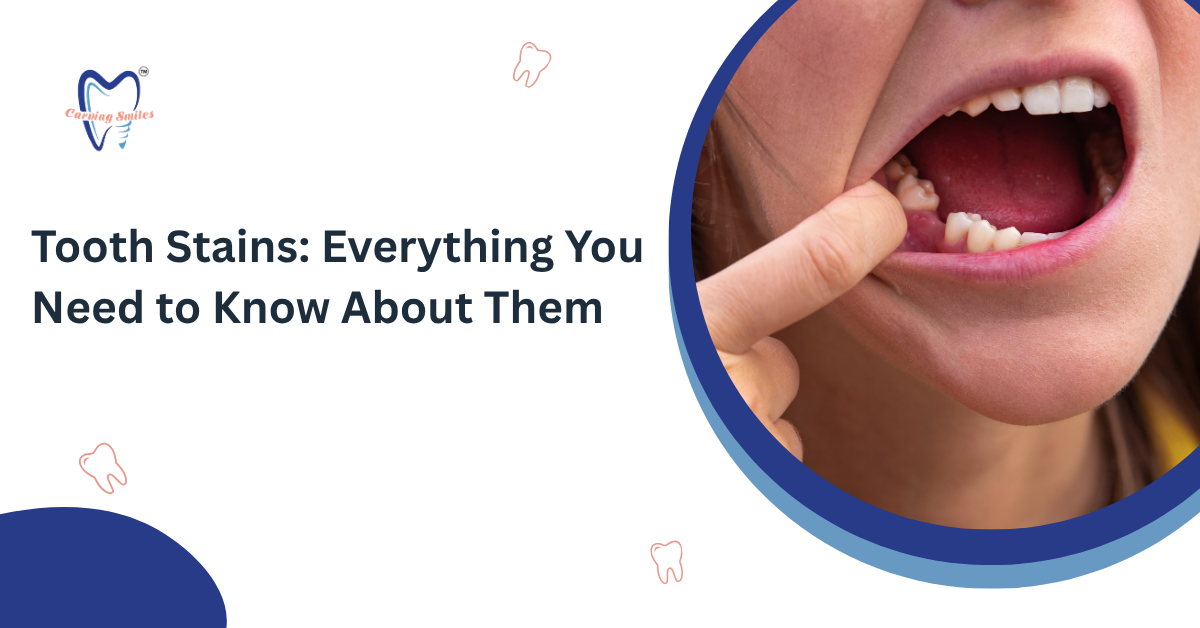
A tooth stain is any change in the natural colour of a tooth. It can show up as a yellow tint, brown patches, white spots or a grey shade. Dentists sort stains into three types, and the type decides what treatment will work.
Types of Tooth Stains
Extrinsic stains sit on the outer enamel. Tea, coffee, red wine, cola, tobacco and strongly coloured foods are the usual causes. Plaque and tartar make it worse because they hold the colour on the tooth.
Intrinsic stains form inside the tooth, in the dentine layer. Brushing can’t reach them. They come from things like:
- Too much fluoride in childhood (fluorosis), which leaves white or brown marks
- Antibiotics such as tetracycline taken while teeth were forming
- A knock or injury to the tooth
- Decay or old silver fillings
- Certain medicines, including some antihistamines and blood pressure drugs
- Genetics, since some people have thinner or darker enamel
Age-related stains are a mix of both. Enamel wears thin over the years, so the yellow dentine underneath shows through. Years of surface stains pile on top of that.
Common Causes of Tooth Stains
Daily habits do most of the damage. Tea and coffee darken enamel slowly, and tobacco speeds up yellowing. Ageing thins the enamel. Some medicines affect tooth colour, and long-term use of chlorhexidine mouthwash can leave brown marks.
Many people brush twice a day and still have stains. That usually means the cause is deeper than the surface, or tartar is building up in places the brush misses.
What the Colour Tells You
- Yellow: thinning enamel or age
- Brown: tea, coffee, tobacco or tartar
- White patches: fluorosis or early enamel damage
- Grey: an old injury, a past antibiotic or a tooth that has lost its nerve
- Black spots: decay or heavy tartar, so get it checked
How to Remove Tooth Stains?
Treatment depends on how deep the stain goes.
Scaling and polishing clears plaque, tartar and surface stains in one visit.
Professional teeth whitening lightens stained enamel gradually. Surface stains respond quickly. Deeper ones may need more than one visit. Before starting, the dentist checks your enamel thickness and sensitivity, so the plan fits your teeth. If you’re looking for teeth whitening in Chembur, a proper assessment first gives you a more predictable and even result. Any sensitivity is usually mild and short-lived.
Microabrasion removes a very thin layer of enamel to treat mild white or brown marks, often from fluorosis.
Dental bonding uses tooth-coloured resin to cover stubborn spots on one or two teeth.
Veneers are thin shells fitted over the front of the tooth. They work well for deep stains that whitening can’t shift, such as tetracycline staining. You can read more on our smile designing and veneers page.
Crowns are used when a tooth is heavily discoloured or damaged. See crowns and bridges.
A tooth that has turned dark after an injury may need a root canal before any cosmetic work.
Do Home Remedies and Whitening Strips Work?
Store-bought strips can help with light surface stains. They often work differently from person to person, because every stain responds in its own way.
Baking soda, charcoal powder and lemon juice are harsher than they look. Used often, they wear down enamel, and thinner enamel makes teeth look more yellow. A whitening toothpaste with a mild abrasive is a safer choice for day-to-day use.
How to Prevent Tooth Stains
- Brush twice a day with fluoride toothpaste and floss daily
- Rinse with water after tea, coffee, wine or cola
- Use a straw for dark drinks
- Avoid tobacco in all forms
- Wait about 30 minutes after acidic food or drinks before brushing
- Get a cleaning every six months
- Treat cavities early, before they darken the tooth
When Should You See a Dentist?
Book a visit if you notice:
- One tooth turning dark or grey
- Brown or black spots that keep growing
- Stains along with pain or sensitivity
- Discolouration that comes back soon after a cleaning
A single dark tooth can point to decay or nerve damage, and it’s better to catch that early.
Final Thoughts
Most stains are harmless and treatable. Surface stains often clear with a professional cleaning, and deeper ones may need whitening or cosmetic work. Good daily habits and regular check-ups keep them from returning.
If your smile has lost its shine, get in touch with Carving Smiles for an assessment and a plan that suits your teeth.
FAQs about Tooth Stains
Can tooth stains be removed completely?
Surface stains usually can. Deep stains may lighten a lot but sometimes need veneers or crowns for full cover.
Why do my teeth look yellow even though I brush daily?
Brushing doesn’t remove stains inside the tooth, and thin enamel lets the yellow dentine show through. Tartar in hard-to-reach spots adds to it.
Is professional whitening safe for enamel?
Yes, when a dentist checks your teeth first and controls the process. Sensitivity can happen but usually settles quickly.
How long do whitening results last?
It depends on your habits. Tea, coffee and smoking bring the colour back faster, so cutting down helps results last.
Can children get tooth stains?
Yes. Causes include fluorosis, certain medicines and poor brushing. A paediatric dentist can advise on the right approach.