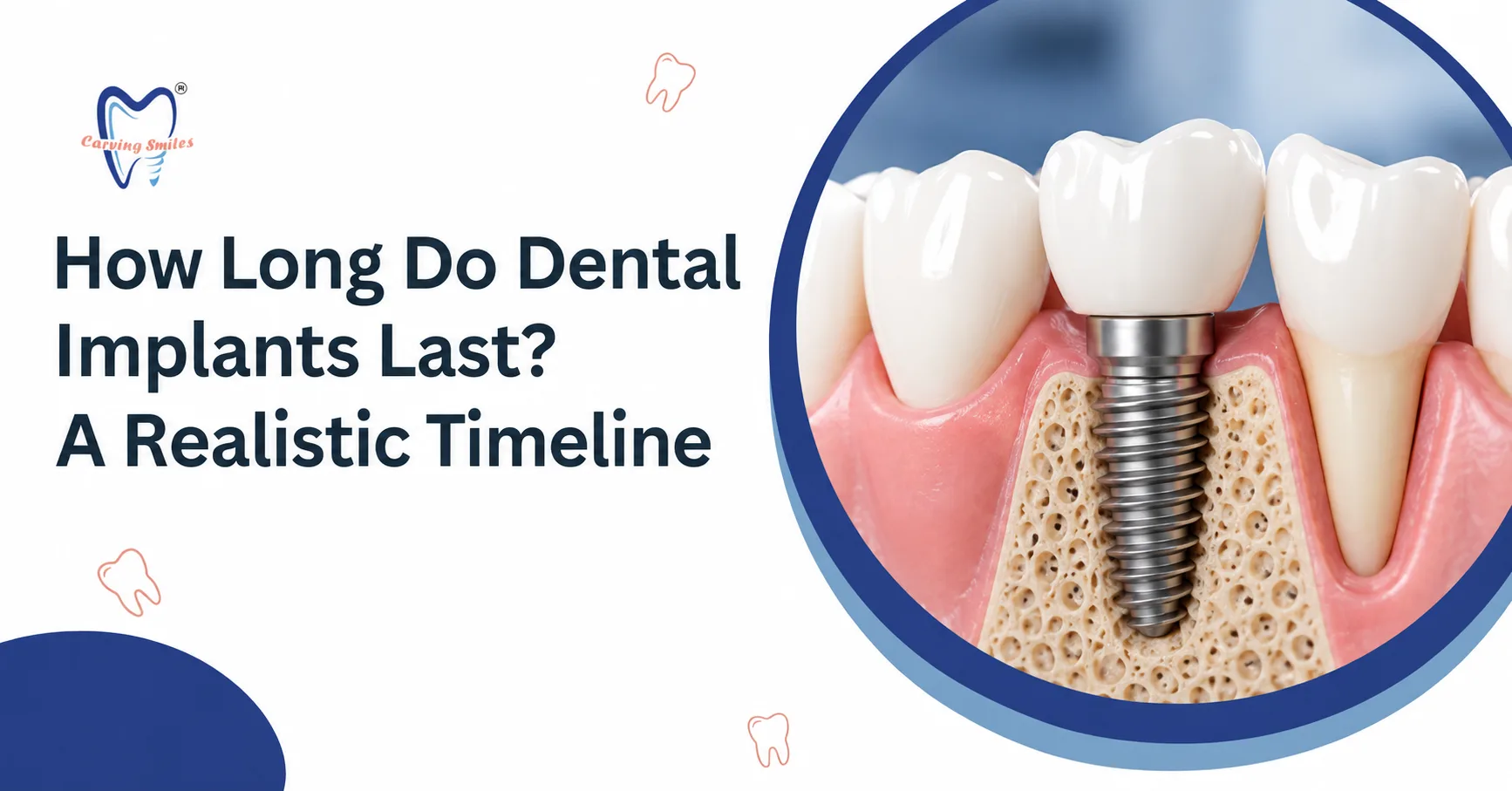
How Long Do Dental Implants Last? A Realistic Timeline
Getting a dental implant can feel like making a long-term commitment to your smile. Naturally, one question follows: “How long will it actually last?” The good news is that dental implants are designed for durability, and many can last 15 years or longer with proper care. Some may even last for decades. But there is no universal expiry date. Your daily habits, oral health, bite, lifestyle, and regular dental care all play a part.
Here’s All You Need To Know About Dental Implants!
1) The First Few Months Build The Foundation
The journey starts with healing. After the implant is placed into the jawbone, the surrounding bone gradually bonds with it through osseointegration. This process usually takes several months, depending on your healing, bone quality, implant location, and individual treatment. During this stage, following your dentist’s instructions matters. Think of it as giving your implant time to settle in properly before asking it to handle everyday chewing and biting.
2) The Implant Itself Can Last For Years
Once successfully integrated, the implant can provide a strong foundation for your replacement tooth. With good care, the implant itself can potentially last 15 years or longer. However, the crown attached to it may not last quite as long. Every day, chewing and grinding, dietary habits, and normal wear can eventually affect the crown. So, needing a new crown someday does not automatically mean the implant has failed.
3) Your Daily Routine Really Matters
Here is where you have more control than you might think. An implant cannot develop a cavity like a natural tooth, but the surrounding gums and bone still need protection. Plaque buildup can cause inflammation and increase the risk of peri-implant disease. Brushing twice daily, cleaning between your teeth, and maintaining regular dental visits can help keep the implant and surrounding tissues healthy. If you are considering Dental Implants in Chembur, discuss the right cleaning routine with your dentist.
4) Small Habits Can Make A Big Difference
Your lifestyle can quietly influence implant longevity. Smoking can interfere with healing and increase complications. Teeth grinding or clenching can also put excessive pressure on the implant and crown. Poor oral hygiene can create additional problems around the supporting tissues. If you grind your teeth, your dentist may recommend a night guard. Protecting your implant from unnecessary stress can help it stay comfortable and functional for longer.
5) Regular Checkups Keep The Timeline On Track
Even a well-cared-for implant needs professional attention. Regular checkups allow your dentist to monitor the gums and the supporting bone, crown, and implant components. Problems such as inflammation, wear, or changes in your bite can then be noticed early. If your implant feels loose, painful, or different from usual, do not simply wait it out. Getting it checked promptly can help prevent a small concern from becoming a bigger one.
In Conclusion
Dental implants are not a “set it and forget it” solution, but they can be remarkably long-lasting. With proper healing, good hygiene, healthy habits, and regular dental care, an implant can serve you for 15 years or much longer. The real secret is simple: give your implant the same attention you give your natural smile, and it can keep smiling back for years.
Missing teeth, gum concerns, or simply due for a check-up? Carving Smiles can help you take the next step!