
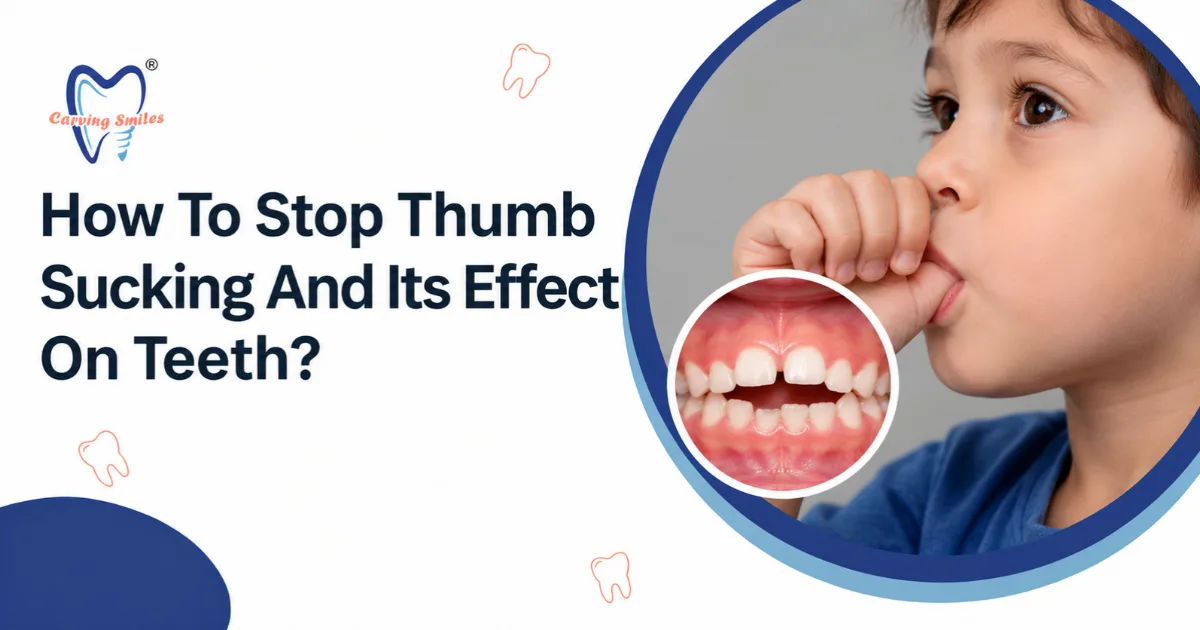
How To Stop Thumb Sucking And Its Effect On Teeth?
Ever noticed how a little thumb can become a child’s favourite comfort buddy? From drifting off to sleep to watching cartoons or feeling nervous, thumb sucking often makes children feel safe. While this habit is perfectly normal during early childhood, continuing it for too long may affect how their teeth grow. The good news? With a little patience, care, and consultation with a pediatric dentist in Chembur, you can help your child break the habit gently.
Know What Thumb Sucking Does To Teeth
Baby teeth may seem tiny, but childhood habits can influence a growing smile. Frequent or intense thumb sucking can push the front teeth outward, create gaps when the teeth should meet, or affect jaw development. These changes do not happen to every child, but prolonged sucking increases the risk. Recognising the habit early helps you take action before dental problems become more noticeable.
Find Out What Makes Your Child Suck Their Thumb
Before trying to stop the habit, play detective! Does your child suck their thumb when sleepy, bored, upset, or looking for comfort? Identifying these triggers makes it easier to find alternatives. If bedtime is the usual culprit, try a favourite stuffed toy, a bedtime story, or a comforting cuddle. When children feel supported, they are more likely to respond positively to gentle changes.
Make Breaking The Habit A Positive Experience
Nobody enjoys being told off for something that feels comforting. Instead of scolding your child, celebrate every little victory. Did they watch their favourite show without sucking their thumb? That deserves some praise! You could also create a simple reward chart to make progress exciting. Explain why healthy teeth matter in words they understand. Consistent encouragement can make the journey feel rewarding rather than stressful.
Keep Little Hands Busy With Better Alternatives
Sometimes, children suck their thumbs without even realising it. A gentle reminder can help them notice the habit without feeling embarrassed. Encourage activities such as colouring, playing with building blocks, or solving puzzles to keep their hands occupied. For bedtime, establish a relaxing routine that helps them feel secure. Avoid threats, punishment, or bitter substances, as these may create distress instead of helping your child develop healthier habits.
Know When To Visit A Dentist
If your child continues thumb sucking beyond around four years of age, consider discussing it with a dentist, particularly if permanent teeth are beginning to appear. You should also seek advice if you notice changes in their bite or tooth alignment. A dentist can assess their development and suggest suitable approaches. Some children may benefit from additional professional support, depending on their age, the habit’s intensity, and its effect on their teeth.
In Conclusion
Helping your child stop thumb sucking is not about winning a battle; it is about building a healthier habit together. Be patient, celebrate progress, and remember that occasional setbacks are normal. Most importantly, make your child feel supported rather than criticised. With timely dental guidance, you can help protect their growing smile while making the entire experience less stressful for both of you.
Tiny teeth, happy smiles! Choose Carving Smiles Dental Clinic for child-friendly care from a pediatric dentist in Chembur!