Full Mouth Rehabilitation
WHAT IS FULL MOUTH REHABILITATION
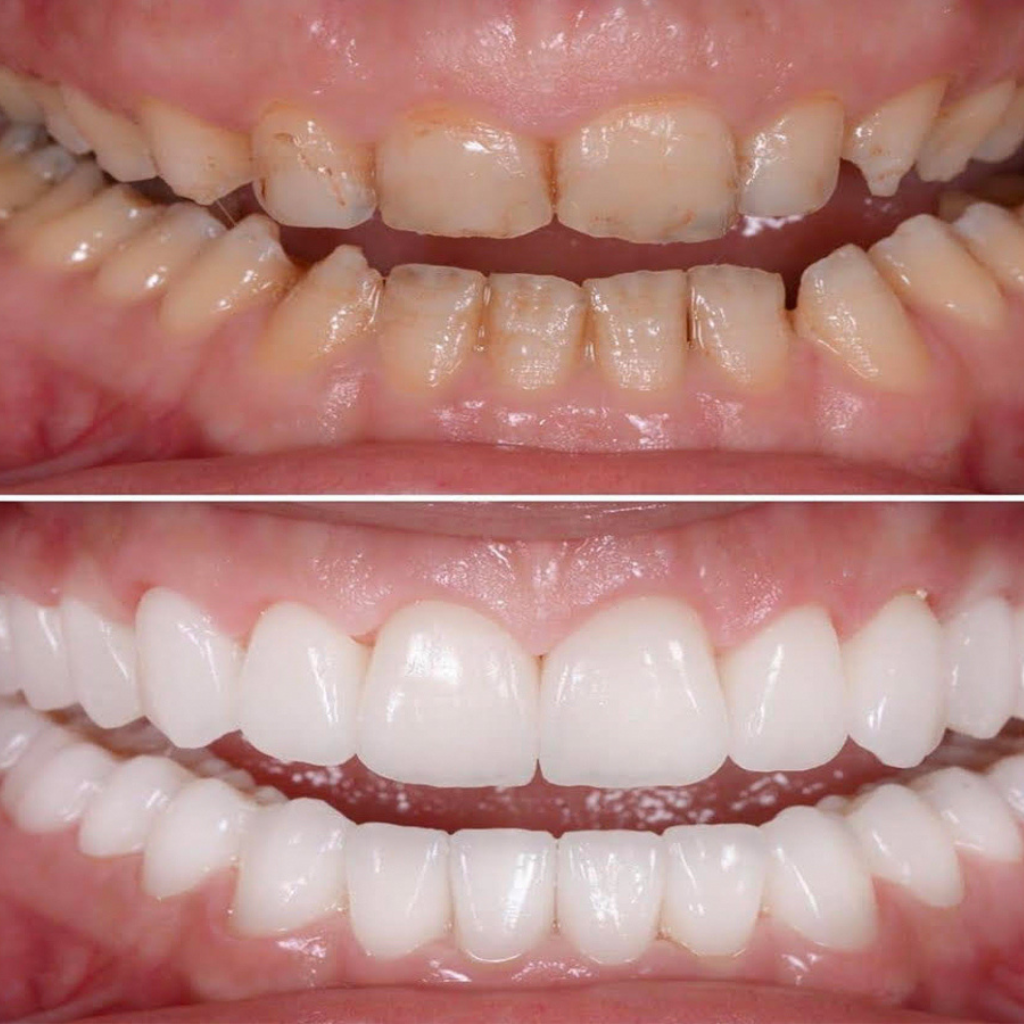
Full Mouth Rehabilitation (FMR), also called Full Mouth Reconstruction, is a complex and comprehensive dental treatment aimed at restoring the health, function, and aesthetics of all teeth in your mouth. Unlike cosmetic-only procedures, FMR focuses on both oral health and dental aesthetics, addressing functional issues like bite problems, jaw pain, and missing teeth, while giving you a confident, natural-looking smile.
WHY FULL MOUTH REHABILITATION IS NEEDED ?
FMR is recommended for patients facing multiple dental challenges such as:
Severely decayed or damaged teeth due to cavities, trauma, or wear
Worn-down teeth caused by bruxism (teeth grinding) or acid erosion
Missing teeth leading to gaps, chewing difficulty, or bite imbalance
Misaligned bite (malocclusion) causing TMJ (jaw) pain or headaches
Gum disease affecting multiple teeth
Esthetic concerns like discoloration, chipping, or uneven teeth
Essentially, if your teeth are failing functionally, structurally, or aesthetically, FMR can rebuild them for long-term oral health.
HOW FULL MOUTH REHABILITATION WORKS
Full Mouth Rehabilitation is highly customized based on your dental condition, bite alignment, and aesthetic goals.
It begins with a comprehensive evaluation, including a clinical examination, dental history review, X-rays, 3D CBCT scans, and impressions to analyze occlusion and identify functional or structural issues.
A personalized treatment plan is created, combining restorative, cosmetic, and corrective procedures, with expected outcomes simulated using digital smile design or mock-ups and a timeline established.
Treatments may include crowns and bridges to restore damaged or missing teeth.
Dental implants can provide permanent replacements with stability and natural aesthetics.
Veneers can correct chipped, discolored, or uneven teeth.
Orthodontic therapy aligns teeth and improves bite efficiency.
Teeth whitening enhances the overall appearance of the smile.
Root canal therapy saves infected or damaged teeth.
Periodontal therapy treats underlying gum disease to ensure a strong foundation.
Occlusal adjustments correct bite issues and prevent wear, pain, or TMJ disorders.
A sequential approach is followed to maximize efficiency and safety during treatment.
Temporary restorations may be placed while permanent solutions are prepared.
Continuous monitoring ensures proper bite, comfort, and aesthetics throughout the process.
Post-rehabilitation care includes regular dental check-ups every six months, good oral hygiene practices, and protective devices like night guards for bruxism patients.
BENEFITS OF FULL MOUTH REHABILITATION
Restored Function: Eat, chew, and speak comfortably without pain or difficulty.
Improved Aesthetics: Natural, uniform, and bright smile.
Long-Term Oral Health: Prevents further dental damage and tooth loss.
Jaw & Bite Relief: Corrects TMJ disorders and relieves jaw discomfort.
Confidence & Quality of Life: Smile without hesitation and enjoy improved self-esteem.
FREQUENTLY ASKED QUESTIONS
Q.1. How long does a full mouth rehabilitation take?
It varies depending on the complexity but usually ranges from 1–6 months, sometimes longer if implants or orthodontics are involved.
Q.2. Is the procedure painful?
Most treatments are done under local anesthesia. Mild discomfort or sensitivity is normal post-treatment and can be managed with medications .
Q.3. Will my teeth look natural?
Yes. Modern dental materials and cosmetic techniques ensure results are highly natural and aesthetically pleasing.
Q.4. Who is an ideal candidate for FMR?
Anyone with multiple dental problems affecting function, health, or appearance of their teeth. A thorough consultation helps determine suitability.
Q.5. How long will the results last?
With proper care, regular check-ups, and good oral hygiene, the results can last 10–20 years or more.