Crowns & Bridges
WHAT ARE DENTAL CROWNS ?
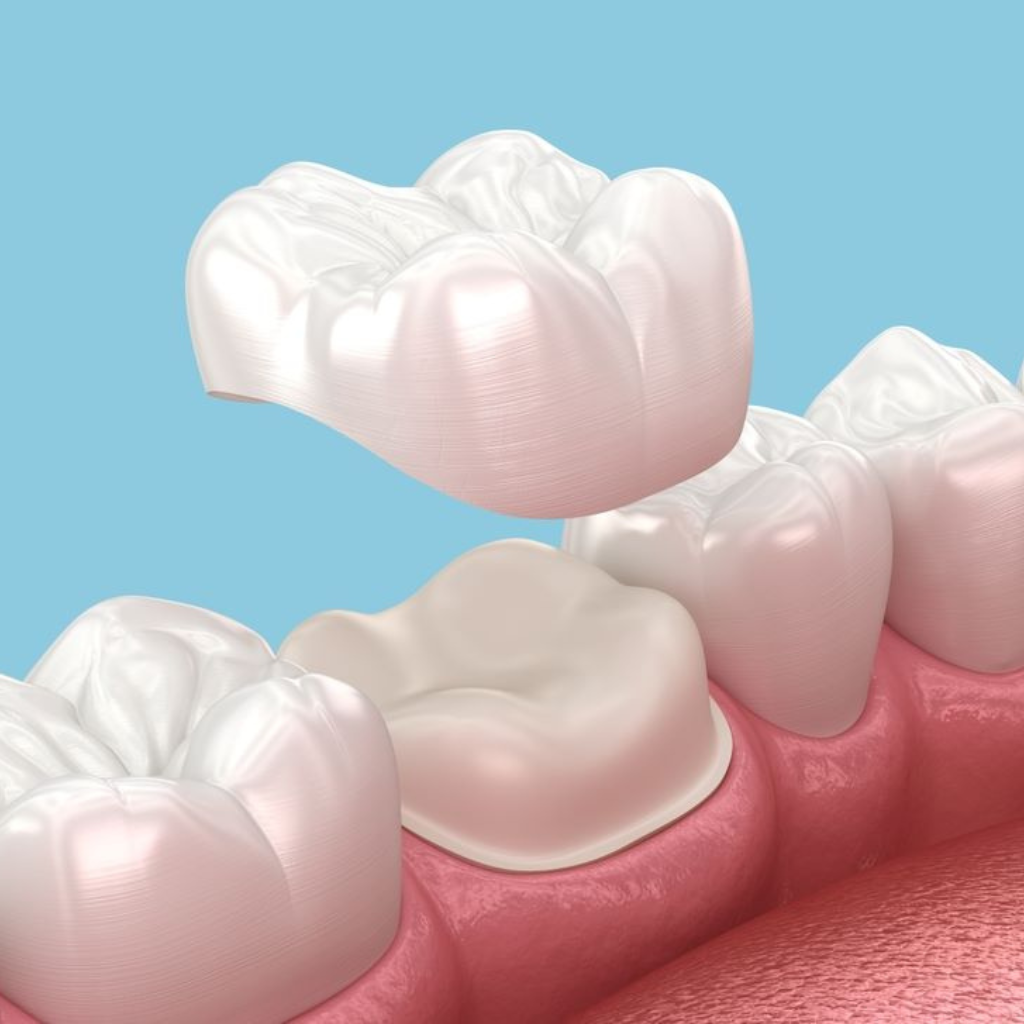
A dental crown is a custom-made cap that covers a damaged, decayed, or weakened tooth to restore its shape, strength, and appearance. It completely encases the visible part of the tooth above the gum line, protecting it from further damage.
Crowns are commonly used after root canal treatment, for broken teeth, or to improve the look of discolored or misshapen teeth.
They can be made from various materials such as ceramic, porcelain, metal, or zirconia, chosen to match your natural tooth color and function seamlessly.
In simple terms — a dental crown helps bring back the natural form, function, and beauty of your tooth.
WHEN IS DENTAL CROWN NEEDED ?
A dental crown acts as a protective cap for a fractured, weakened, or missing tooth, helping preserve its strength and function while restoring a natural appearance.
You may need a dental crown to:
Protect a tooth weakened by trauma or fracture
Restore a tooth that’s too damaged or large for a filling
Cover a dental implant after placement
Strengthen a tooth treated with root canal therapy
Improve appearance of discolored, misshapen, or worn teeth
Support a dental bridge to replace missing teeth
Ignoring a damaged tooth can lead to further wear or stress on neighboring teeth, eventually causing additional dental problems. A crown helps preserve your smile and prevent future complications.
WHAT ARE VARIOUS TYPES OF DENTAL CROWNS ?
Types of Dental Crowns
Dental crowns are available in a variety of materials, each designed to meet different functional and aesthetic needs.
1. Metal Crowns
Metal crowns are known for their strength, durability, and cost-effectiveness. They withstand chewing forces well and are ideal for back teeth where appearance is less important.
However, since the metallic color is visible, they are not preferred for front teeth. Gold crowns are also available for patients who prefer a more traditional and long-lasting option.2. Porcelain-Fused-to-Metal (PFM) Crowns
PFM crowns combine the strength of metal with the natural appearance of porcelain.
The inner layer is metal, which adds durability, while the outer porcelain coating blends seamlessly with your natural teeth.
These crowns are a great choice for patients who value aesthetics but also want added strength. However, over time, the porcelain layer may wear down slightly, exposing the metal beneath.3. Metal-Free Crowns (Zirconia & Ceramic)
Metal-free crowns are made entirely from tooth-colored materials like Zirconia or Ceramic, offering the perfect blend of strength and aesthetics.
They are biocompatible, long-lasting, and ideal for front or back teeth, as well as bridges.
Unlike PFM crowns, they eliminate the risk of metal visibility or porcelain wear — giving a completely natural and seamless look.
DO’S AND DON’TS WITH DENTAL CROWNS
Care Tips for Dental Crowns
Do’s
Maintain excellent oral hygiene — brush twice a day, floss regularly, and rinse after meals to protect the natural tooth beneath the crown from decay.
If you grind or clench your teeth, use a mouthguard to prevent damage or wear to your crown.
Schedule a dental check-up every 6 months to ensure your crown and surrounding teeth remain in perfect condition.
Don’ts
Avoid using your teeth as tools — never open bottles, tear wrappers, or bite hard objects, as this can crack or loosen the crown.
Refrain from biting nails or chewing pens and pencils to prevent unnecessary pressure on your teeth.
Do not chew hard foods like ice or hard candies, which can damage the crown surface.
Avoid sticky foods that may pull or loosen the crown.
Limit very hot or cold foods, especially if you experience sensitivity.
MYTHS ABOUT DENTAL CROWNS
Common Myths About Dental Crowns
1. Dental Crowns Don’t Look Natural
It’s a common misconception that crowns appear artificial. Thanks to modern dental technology, crowns are now available in tooth-colored materials like ceramic and zirconia that blend seamlessly with your natural teeth.
2. Crowns Last Forever
While dental crowns are highly durable, they don’t last a lifetime. Their longevity depends on oral hygiene and maintenance. Regular 6-month dental checkups help ensure crowns remain in good condition and are replaced at the right time.
3. Food and Beverages Stain Crowns
Unlike natural teeth, crowns are made from stain-resistant materials. Coffee, tea, and wine may discolor your natural enamel, but your crown will maintain its color and shine with proper care.
4. Crowns Are Only for Restorative Dentistry
Crowns aren’t limited to repairing damaged or root canal–treated teeth. They are also used in cosmetic dentistry to enhance smile aesthetics — improving tooth shape, color, and alignment for a more attractive appearance.
5. Dental Crowns Never Break or Chip
Crowns are strong but not indestructible. Biting on very hard objects or experiencing accidents or trauma can cause chipping or fractures. It’s best to avoid habits like chewing ice or hard candy to prevent damage.
6. You Can’t Get Cavities Under a Crown
Even though crowns are artificial, the natural tooth beneath is still prone to decay if oral hygiene is neglected. Regular brushing, flossing, and dental cleanings are essential to protect the supporting tooth and gums.
FREQUENTLY ASKED QUESTIONS
Q.1. How long do dental crowns last ?
With proper care and regular dental checkups, crowns typically last 10 to 15 years — sometimes longer, depending on the material and oral hygiene.
Q.2. Is the dental crown procedure painful ?
No. The procedure is performed under local anesthesia, making it comfortable and pain-free. You may feel mild sensitivity for a day or two afterward, which quickly subsides.
Q.3. Can dental crowns look natural ?
Absolutely. Modern crowns made from ceramic or zirconia are designed to match the color, shape, and shine of your natural teeth, blending in seamlessly with your smile.
Q.4. How should I take care of my dental crown ?
Brush and floss regularly, avoid chewing very hard or sticky foods, and schedule dental checkups every 6 months. Good hygiene helps your crown and the underlying tooth last longer.
Q.5. Can a crowned tooth still get cavities ?
Yes — while the crown itself doesn’t decay, the natural tooth beneath it can. Keeping the area around the crown clean is essential to prevent cavities and gum issues.