
Wisdom Tooth Surgery & TMJ Pain Control
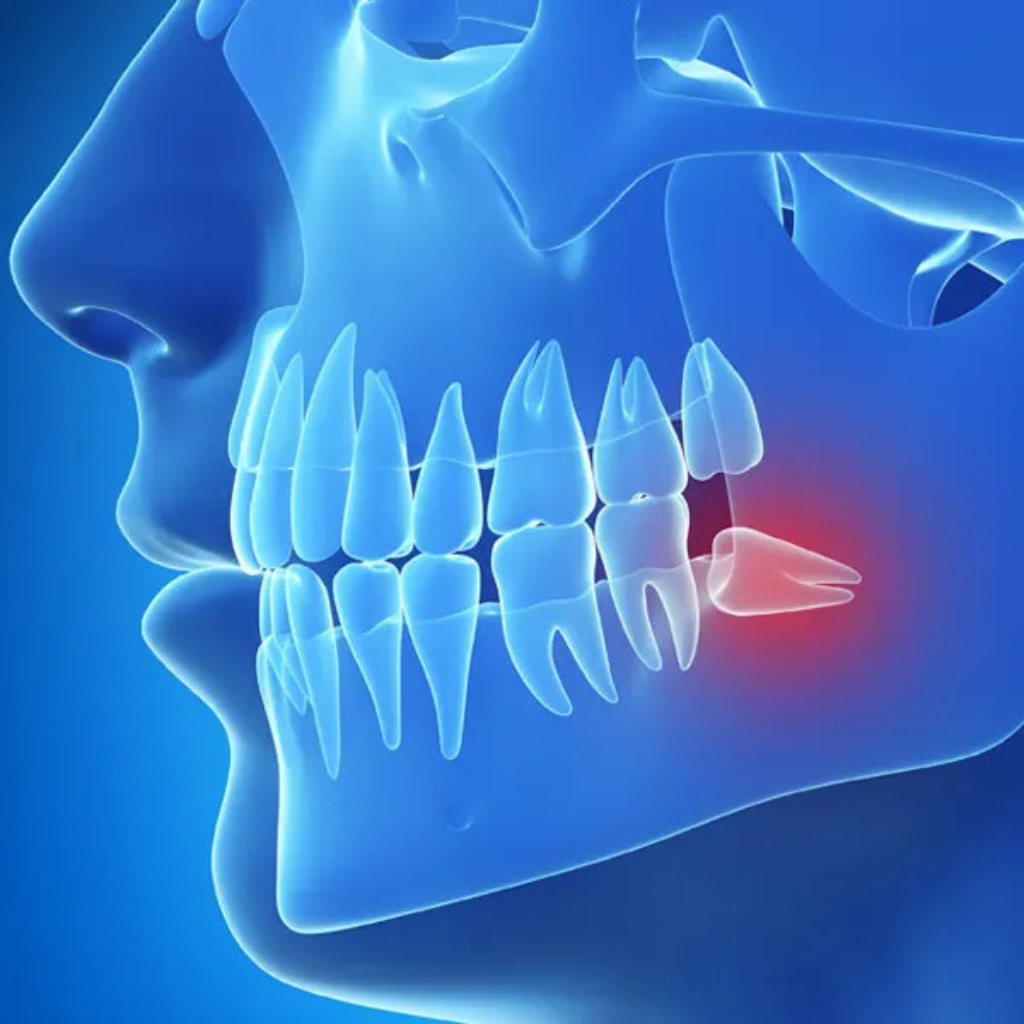
WHAT IS WISDOM TOOTH REMOVAL ?
Wisdom teeth, also known as third molars, usually erupt between the ages of 17 and 25. For many individuals, these teeth may not have enough space to grow properly, leading to impaction, pain, swelling, or infection.
When left untreated, impacted wisdom teeth can cause crowding, damage to nearby teeth, or cyst formation in the jawbone.
WHEN DO YOU NEED WISDOM TOOTH REMOVAL?
Wisdom tooth extraction may be recommended if you experience:
Persistent pain or swelling at the back of your mouth
Difficulty opening your mouth or chewing comfortably
Repeated gum infections around the wisdom tooth area (pericoronitis)
Decay in or around the wisdom tooth due to difficulty in cleaning
Jaw stiffness, crowding, or shifting of nearby teeth
Cyst or bone infection seen on dental X-rays
In such cases, surgical removal ensures the health of surrounding teeth, gums, and jawbone.
AFTERCARE & RECOVERY
Apply cold compresses for the first 24 hours to reduce swelling.
Avoid hot, hard, or spicy foods for a few days.
Rinse gently with warm salt water after meals (starting 24 hours after surgery).
Take prescribed medications as directed.
Avoid smoking or using straws, as suction can disturb healing.
Most patients recover fully within 3–5 days, and complete healing occurs in about 2 weeks.

WHAT IS TMJ PAIN ?
The temporomandibular joint (TMJ) is the hinge that connects your jaw to your skull, enabling essential movements like talking, chewing, and yawning. When this joint is damaged or irritated, it can lead to TMJ disorder (TMD) — a condition that often causes jaw pain, stiffness, and a distinct clicking or popping sound when opening or closing the mouth.
While jaw clicking may be harmless in some cases, persistent clicking combined with pain or restricted movement can signal a deeper issue. Understanding the cause is key to finding the right treatment and regaining comfortable, pain-free jaw function.
COMMON SYMPTOMS OF TMJ DISORDERS
Jaw pain or tenderness
Clicking, popping, or grinding sounds while opening the mouth
Limited or painful jaw movement
Headaches, neck pain, or ear discomfort
Difficulty chewing or locking of the jaw
BENEFITS OF TMJ & WISDOM TOOTH TREATMENT AT CARVING SMILES
Performed by specialized Maxillofacial Surgeon – Dr. Chirag Bhatia
Use of digital imaging and guided techniques for precision
Pain-free, minimally invasive surgeries
Comprehensive jaw assessment for accurate diagnosis
Emphasis on comfort, healing, and long-term function
BOOK APPOINTMENT
FREQUENTLY ASKED QUESTIONS
Q.1. Is wisdom tooth removal painful?
No. The procedure is done under local anesthesia, ensuring you feel no pain during surgery. You may experience mild soreness or swelling afterward, which subsides within a few days with proper care and medication.
Q.2. How long does it take to recover from wisdom tooth surgery?
Most patients recover within 3–5 days, depending on the complexity of the extraction. Complete healing of the gums and bone generally occurs in 10–14 days.
Q.3. What should I avoid after wisdom tooth surgery?
Avoid hot, hard, or spicy foods, smoking, and using straws for the first few days, as these can disturb healing. Stick to soft foods and follow your dentist’s aftercare instructions carefully.
Q.4. What causes TMJ pain?
TMJ pain may result from jaw misalignment, teeth grinding (bruxism), arthritis, stress, or trauma. It can also occur due to improper bite or clenching of teeth during sleep.
Q.5. How is TMJ pain treated?
TMJ pain is treated using custom night guards, medications, jaw exercises, physiotherapy, and in some cases, bite correction or stress management techniques. The goal is to relieve pain, restore jaw movement, and prevent long-term joint issues.